LAB Mastery
Trials, Data Logs & Scaling for Whole-System Use
Implementing LAB Strategically Across the Farm
At Level 4, we move beyond small batches and basic applications. This is where LAB becomes a strategic, data-driven part of your KNF system — integrated across soil, plants, animals, and even water systems. We’ll explore how to conduct your own field trials, maintain fermentation quality, and plan for year-round use.
This level is especially useful for farmers, consultants, researchers, and serious homesteaders who want to document, compare, and scale their inputs with confidence.
Designing a LAB Trial for Your Farm
Field trials don’t have to be complex. Start with a question:
-
Does LAB reduce disease pressure on tomato plants?
-
Does adding LAB to chicken water improve feed conversion?
-
Will soil drenches with LAB improve compost breakdown?
Trial Design Basics:
-
Control vs Treatment: Use one area or group without LAB and one with it.
-
Consistency: Apply the same water, feed, and care to both.
-
Observation Windows: Weekly notes on color, growth, health, smell, etc.
-
Data Logging: Use notebooks, spreadsheets, or digital apps.
Setting Up a LAB Production System
For ongoing use, set up a dedicated fermentation area:
-
Fermentation Calendar: Stagger your rice water starts to always have fresh LAB in the pipeline.
-
Shelf-stabilized Backup: Keep a molasses-stabilized batch on hand.
-
Label Everything: Date, batch notes, temperature ranges, raw materials used.
Fermentation Variables to Track
-
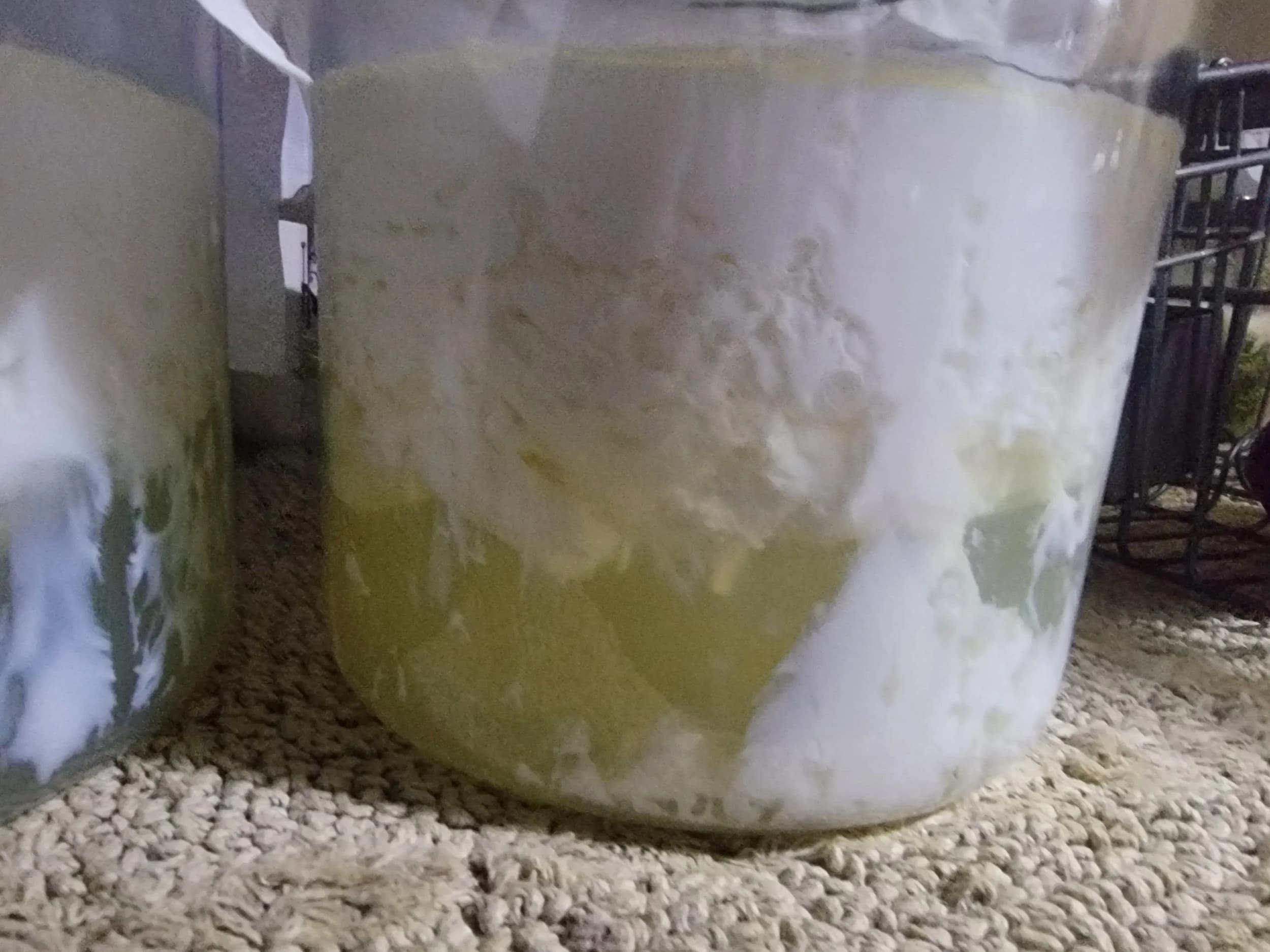
Type of milk (raw, pasteurized, organic, goat, etc.)
-
Temperature range during fermentation
-
Smell and separation time
-
Storage method and longevity
This info helps refine your method and compare batch effectiveness over time.
Scaling LAB for Field, Livestock, and Infrastructure
-
Field: Use a backpack sprayer or 25–50 gallon tank with a dilution of 1:1000.
-
Livestock: Mix daily into troughs, or set up dosing in water lines.
-
Compost/Manure Pits: Spray or drench during turning or addition of fresh materials.
-
Ponds/Water Troughs: Small amounts of LAB can reduce algae and biofilm.
Pro-Level Strategy: Integrating with Seasonal Cycles
-
Spring: Combine with IMO and FPJ to prep beds and boost microbial activity.
-
Summer: Add to foliar sprays to reduce mildew and heat stress.
-
Fall: Drench in compost piles, manure bins, and post-harvest cover crops.
-
Winter: Stabilize and store batches, maintain indoor fermentation with temperature control.
Final Notes: LAB as a Keystone Input
By now, you’ve likely seen how LAB serves as a bridge across systems. It connects animals to soil, ferments to plant health, and microbes to fieldwork. In KNF, it’s more than a recipe — it’s a tool for stewardship, resilience, and regeneration.
What’s Next? LAB + Data in Community Trials
Want to go further? Consider designing community-scale experiments or joining KNF research networks. Share your results and contribute to open-source learning.