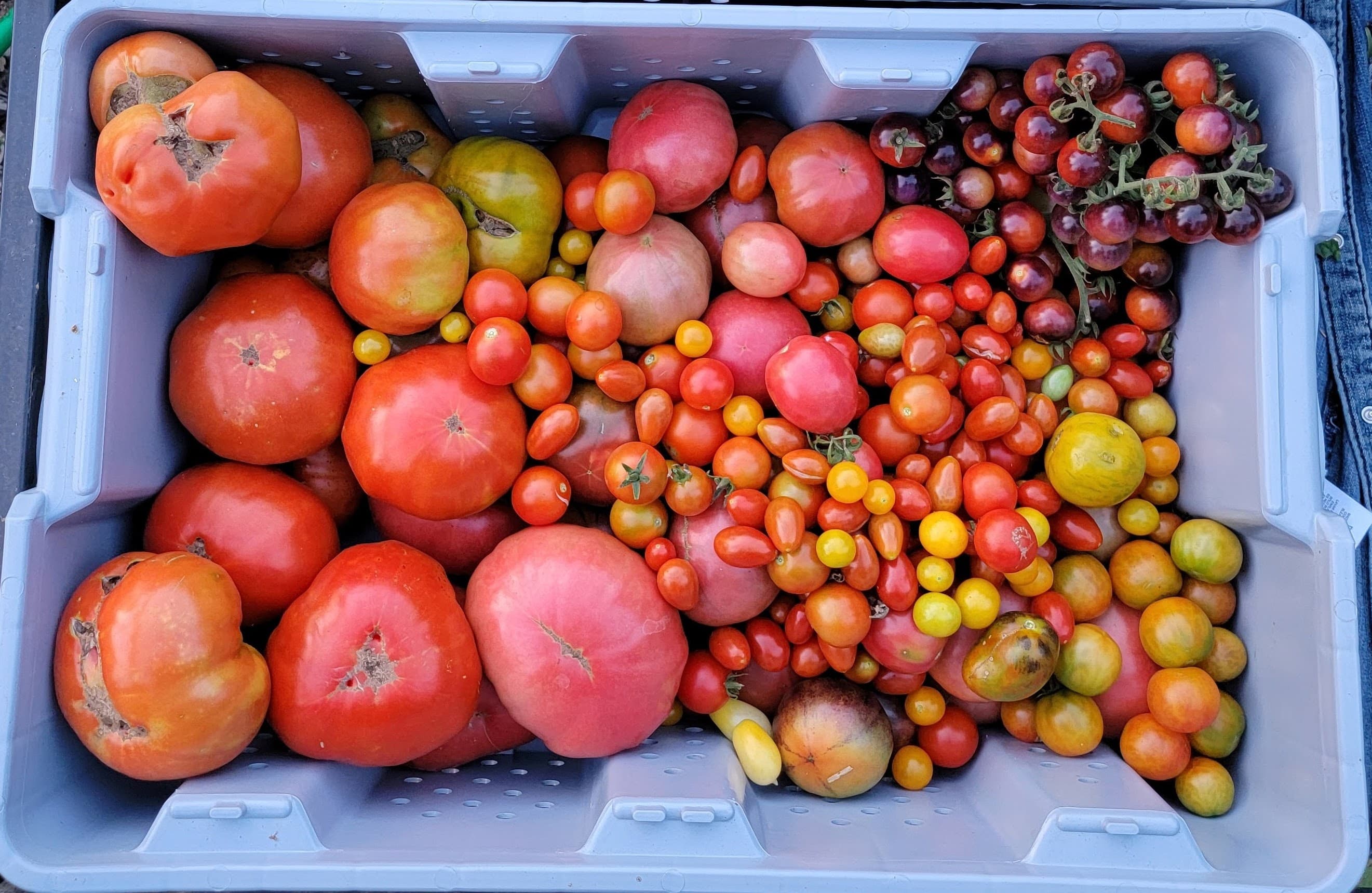
Pink Brandywine
Heirloom · Indeterminate
Rich, full tomato flavor with balanced sweetness and acidity. Silky texture with dense flesh and small seed cavities. Known for old-fashioned, "true tomato" taste.
Pink Brandywine isn't just a tomato — it's a warm summer afternoon, a quilt on the porch swing, and the scent of honeysuckle on the breeze. With lace-edged leaves and fruit the color of a country sunset, this heirloom brings more than flavor to the table. It carries memory. Whether sliced thick for a tomato sandwich or admired for its old-soul charm, Pink Brandywine turns your garden into a place where time slows down and summer lingers just a little longer.
Growth Habit
Pink Brandywine grows as a tall, vigorous indeterminate vine, typically reaching 6–7 feet with proper support. The distinctive potato-leaf foliage sets it apart from standard tomato plants, with smooth-edged leaves that add ornamental value to the garden. This variety requires strong staking or caging to support its productive vines throughout the growing season.
Production Notes
Fruit Set & Yield
Moderate to high yield, though variable depending on weather conditions. Early season heat can affect fruit set, with best production occurring in moderate summer temperatures. Fruits develop best with steady, consistent watering throughout the season.
Disease Considerations
Shows fair disease resistance overall, but can be sensitive to Septoria leaf spot and other foliar diseases in humid conditions. Proper spacing, good airflow, and preventative measures are important for maintaining plant health through the season.
Weather Performance
Performs best in years with moderate summer heat. Extreme heat during flowering can reduce fruit set. Flavor development is optimal with steady growing conditions and adequate moisture.
Growing Notes — Storeys in the Dirt Observations
Soil & Fertilization
- Performs exceptionally well in rich, well-draining KNF-amended soil
- Benefits from mid-season calcium and potassium supplementation
- Responds well to regular LAB foliar applications
- FPJ (Fermented Plant Juice) applied at flowering stage improves fruit quality
Companion Planting
- Thrives when planted near basil and borage
- Marigolds planted nearby help reduce pest pressure
- Good spacing from other plants ensures adequate airflow
Pest Management
- Monitor regularly for tomato hornworms, especially mid-season
- Responds well to BT (Bacillus thuringiensis) treatment when needed
- Preventative observation more effective than reactive treatment
KNF Applications
- Regular LAB (Lactic Acid Bacteria) foliar spray supports plant health
- FPJ application during flowering and early fruit set stages
- Calcium supplementation during fruit development prevents blossom end rot
Seed Saving Goals
Current Status: Planned for 2025 harvest season
Selection Criteria:
- Largest, most uniform fruits
- Best-flavored specimens from healthy plants
- Early fruit set characteristics
- Disease resistance in humid conditions
Goals for 2026:
- Select for earlier, more consistent fruit set
- Improve flavor stability across varying weather conditions
- Maintain heirloom characteristics while enhancing adaptability
Quick Facts
Type
Indeterminate
Heritage
Heirloom
Days to Maturity
80–90 days from transplant
Size
12–20 oz average
Color
Deep pink skin, pink-red flesh
Yield
Moderate to high (variable by year)
Culinary Uses
- Slicing — sandwiches, caprese salads
- Fresh eating
- Sauce — thick, rich, slightly sweet
- Roasting — caramelizes beautifully
Photo Gallery
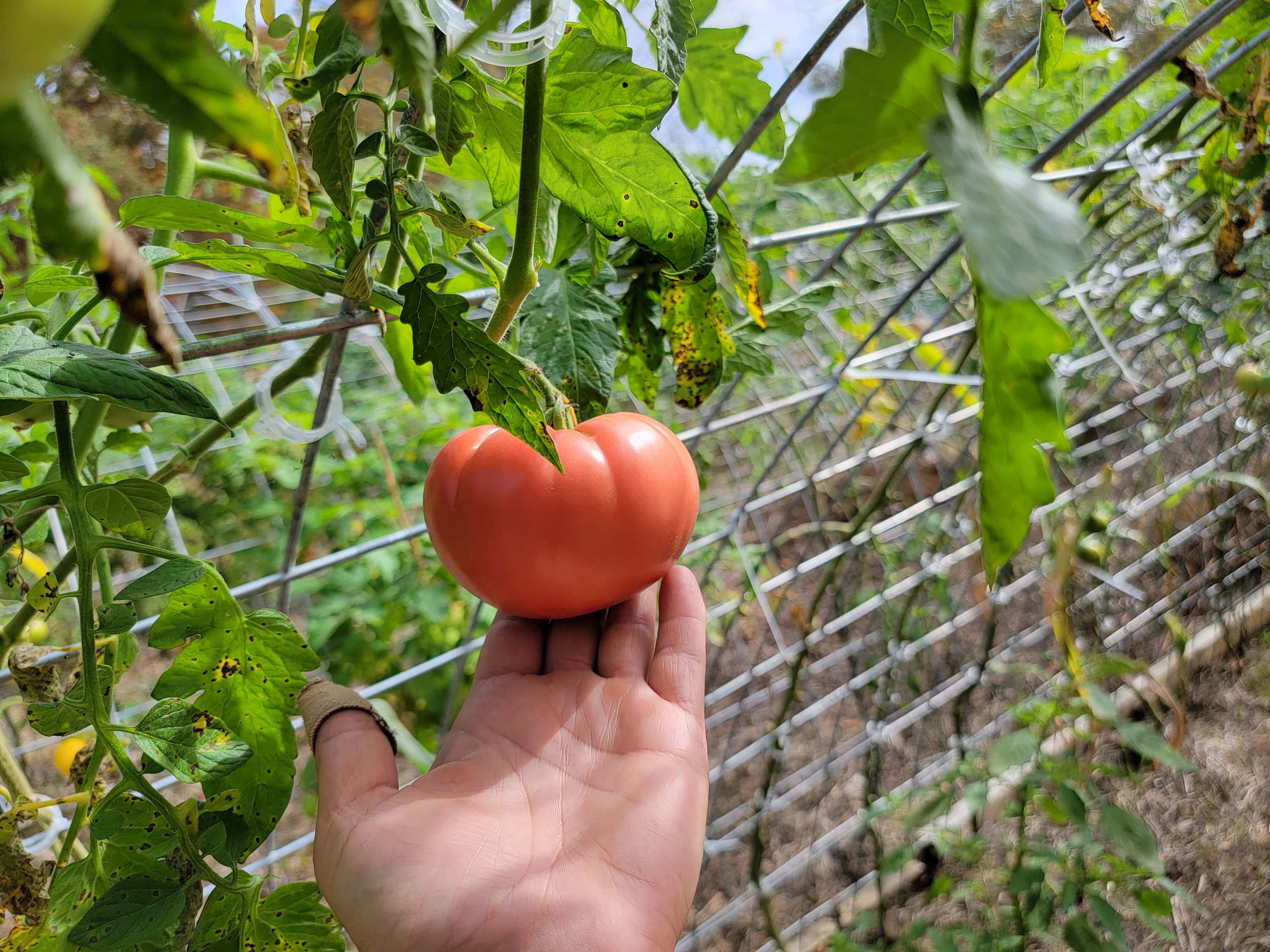
Companion Plants
Yearly Growing Notes
2023
First season on farm; excellent flavor; Septoria noted late season
2024
Adjusted staking; better airflow; improved yield
2025
Current season; planted in new bed rotation; monitoring for improved disease resistance with KNF program