Julius Hensel's Mineral Agriculture
Julius Hensel and the Return to Minerals
Why long-term fertility begins beneath biology
As agricultural chemistry advanced through the 19th century, the focus increasingly narrowed toward what could be measured quickly and corrected efficiently. Nutrients were identified, deficiencies named, and inputs applied.
But not everyone agreed that this was the right direction.
Long before biology re-entered the agricultural conversation in a formal way, Julius Hensel raised a different concern: that agriculture was losing sight of its mineral foundation.
A different question
Where Liebig asked what plants removed from the soil, Hensel asked something more foundational:
What is the soil made of, and how does that shape life over time?
Hensel was not opposed to chemistry. He was wary of short-term correction replacing long-term nourishment.
He observed that fields receiving repeated applications of soluble fertilizers often showed:
- initial yield increases
- followed by declining structure
- reduced resilience
- and growing dependence on inputs
To Hensel, this suggested not a lack of nutrients alone—but a loss of mineral integrity.
Rock dust and remineralization
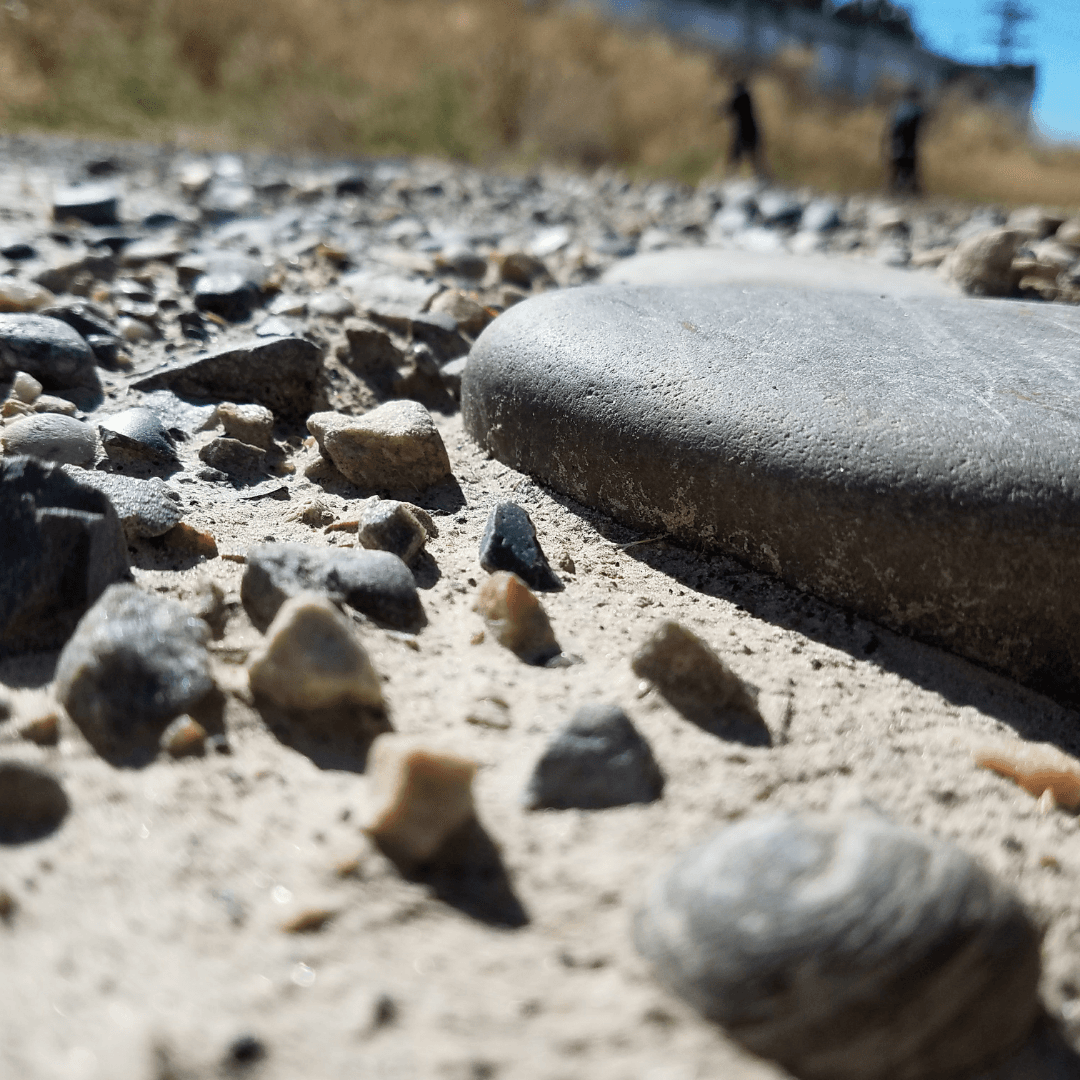
Hensel’s most well-known contribution was his advocacy for finely ground rock—what we now refer to as rock dust or remineralization.
His reasoning was simple and rooted in geology:
Soils originate from rock. Plants evolved in mineral-rich environments. Weathering supplies a broad spectrum of elements over time.
When agriculture removes harvest after harvest without replacing those minerals, fertility declines—not immediately, but inevitably.
Rock dust was not a fertilizer in the conventional sense. It was a restorative input, intended to rebuild what extraction had removed.
Fertility as a long-term condition
Hensel distinguished between feeding plants and building soil.
Soluble fertilizers could stimulate growth. Minerals shaped structure, buffering, and endurance.
One was immediate. The other cumulative.
Hensel argued that sustainable fertility required:
- a broad mineral spectrum
- slow availability
- time for integration
This was not an argument against productivity. It was an argument against exhaustion disguised as success.
Early resistance to synthetic fertilizers
As industrial fertilizers gained traction, Hensel became an outspoken critic.
His resistance was not ideological. It was observational.
He saw that soluble inputs:
- bypassed soil structure
- encouraged shallow rooting
- and failed to replace the full range of minerals removed by harvests
He worried that agriculture was trading resilience for speed.
History suggests he was not wrong.
The garden lesson: organic is not the same as balanced
Modern gardeners often assume that adding organic matter guarantees soil health.
It does not.
Compost improves biology. Mulch protects structure. Organic inputs feed microbes.
But none of these automatically replace depleted minerals.
A soil can be rich in organic matter and still lack:
- calcium for aggregation
- trace elements for enzyme function
- mineral diversity for long-term stability
Without minerals, biology has nothing to work with.
Why depleted soils stay depleted
Hensel’s warning still applies.
If minerals are removed faster than they are replaced, soils decline—even when they appear biologically active.
Plants may grow. Yields may hold. But resilience erodes.
This is why some gardens:
- require increasing inputs each year
- show inconsistent responses to compost
- struggle despite good care
The foundation is missing.
Why Hensel matters now
Hensel’s work sits between two eras.
Before biology was well understood. Before chemistry became dominant.
He reminds us that minerals are not optional. They are the stage on which biology performs.
His ideas did not win their moment. But they did not disappear.
They waited.
As soil science continues to reconnect chemistry, biology, and structure, Hensel’s insistence on mineral completeness feels less like resistance—and more like foresight.
Next, we will move into the work of those who began to formalize balance itself—linking minerals, structure, and living systems into a more complete picture of soil health.